
Put your line on the same page.
The plant says 80% solids. The wall doesn't wear on that number. It wears on solids by volume, and two lines with the same plant figure can differ by ten points. Three numbers put your line on the same basis as the one our returned parts come off.
Take 100 kg of paste at 80% solids: 80 kg of rock, 20 kg of water. The water takes up 20 litres. The rock takes up 80 divided by its specific gravity. On a gold tailing at SG 2.2 that's 36 litres, so solids by volume is 36 of 56 litres: about 65%. The same 80 kg on a nickel tailing at SG 3.0 is 27 litres, so solids by volume is 27 of 47: about 57%.
Same number on the plant screen. Eight points less by volume, because dense rock takes up less room.
Type your own numbers in. Two from the plant, one from the lab. The result updates as you go, and nothing leaves this page until you decide to send it.
The plant figure. Most paste lines run 70 to 86.
From the lab sheet. Gold (quartz-carbonate) 2.2 to 2.7; nickel-copper 2.8 to 3.3.
Doesn't change the result. It goes with it so the comparison is honest.
This is solids by volume from the plant figure and the dry SG. Velocity and what the tailing is made of come next, and they matter. This is the first number, and the one the plant figure hides.
Gold tailing, SG 2.2. Better than 80% solids by mass, slump 10½ to 11 inches. By volume that's about 65%, and about 67% on the days it runs 82%.
The 6-inch hardfaced elbow at the borehole collar, the last fitting before the paste goes down the hole, came out of that line at over 110,000 tonnes. A heavier tailing running in the low to mid 80s by mass sits at 60 to 65% by volume. On the basis the wall cares about, that's like for like, or a bit easier.
What that elbow looked like inside, and what changed on the drawing because of it: What a worn elbow tells you before it goes in the bin.
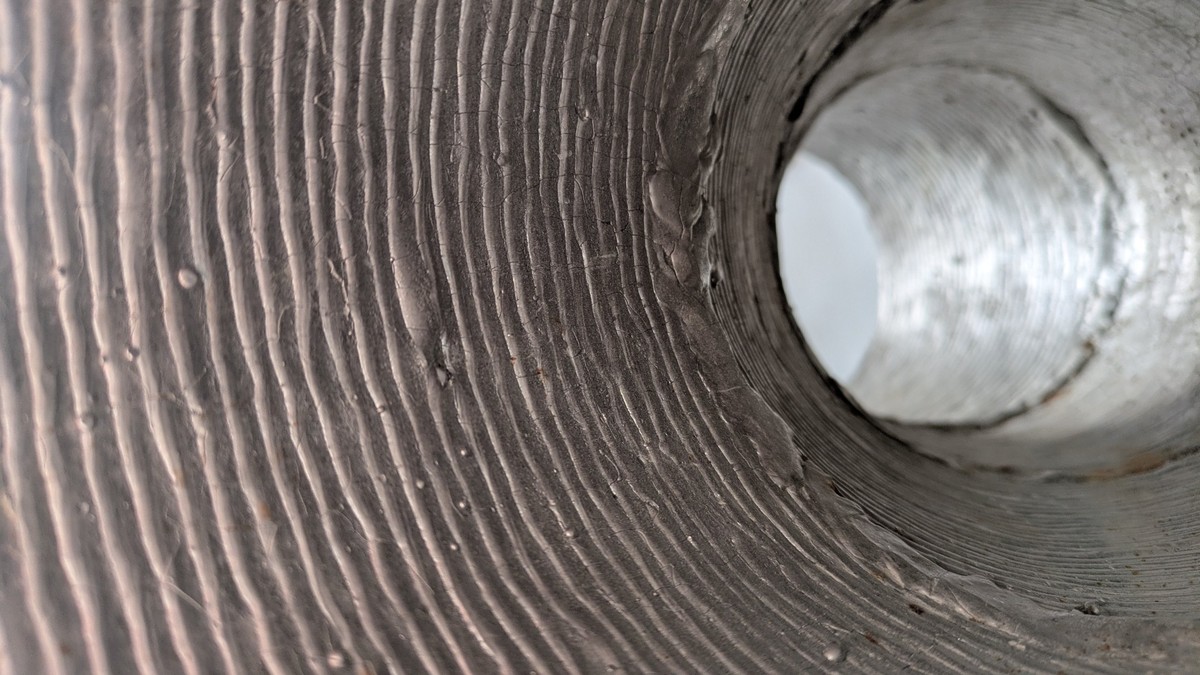
Send them and the service record comes back on your basis: where your line sits against the reference, and what the collar elbow on a line like yours should be doing. No form, no list. It's an email to me.
My line: 80% / SG 2.2 / 10.5 in slump → 65% by volume
If the button doesn't open your mail, copy the line above into a message to sales@opcindustrial.com. Joel Gagne reads it, nobody else.
The reference card, one page. The bucket, the table across the SG range, and the reference line worked through. Download the PDF.
What to write down at changeout. Position, part, date in, date out, tonnes through, the three numbers. One line. That line and the part are what the next drawing gets built from: Return & Reinforce.
Send us the next one that comes out.
With the line from the changeout record. A photo of the bore and the three numbers is enough to start.