
When an elbow comes off a paste line at changeout it usually goes straight to the bin. That's reasonable. It has done its tonnage and there is a new one on the shelf.
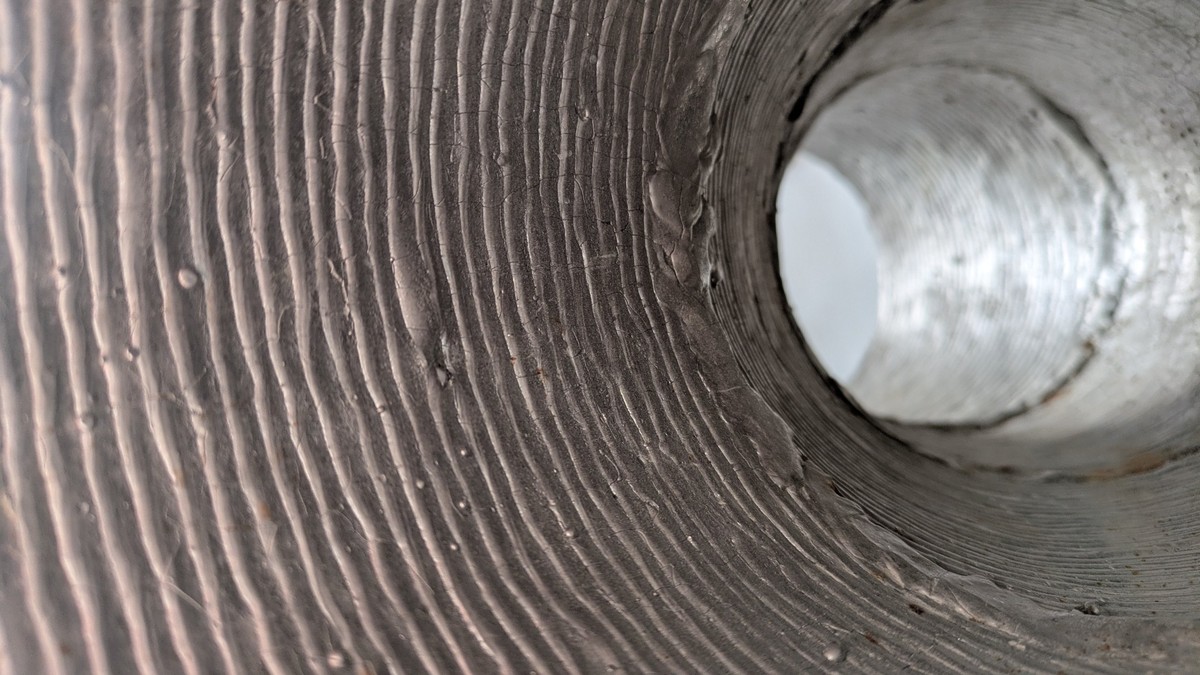
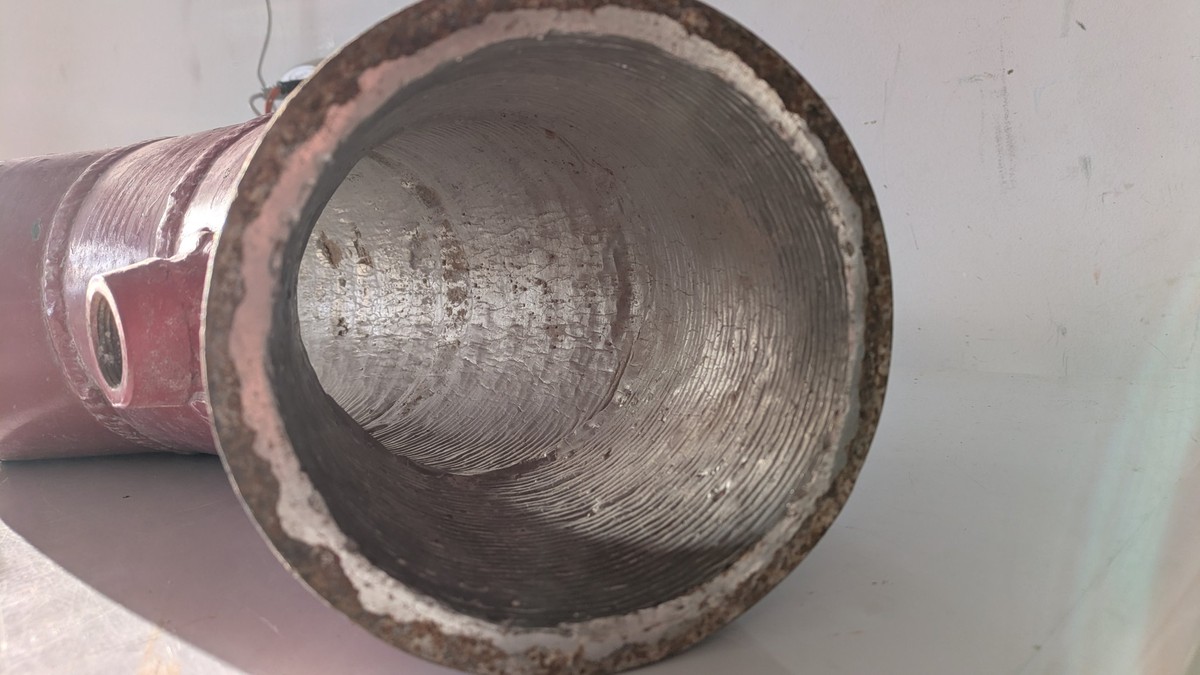
If you open one before it goes, though, there is something worth seeing. The wear isn't spread around the bore. It sits in a strip along the outside of the bend, where the slurry comes off the straight and runs into the wall. On a hardfaced elbow that strip is where the bead crests have been polished flat and the valleys between them are starting to go. A few inches round the bore from there the beads are still standing and you can still make out the weld sequence. Most of a worn-out elbow isn't worn out.
That isn't particular to this elbow. The same position on the same line wears the same way at every changeout, because nothing about the geometry has changed. The pipe comes in straight, the bend turns it, and the slurry keeps going the way it was already going for a bit longer than the wall would like. The wall wears where that stream lands, and it lands in the same place every time.
The drawing has been the same all the way round
Until recently our elbows, like every other hardfaced elbow we've handled, were built with the same deposit everywhere: full interior, the same thickness on the inside of the bend as on the outside, the same at the ends as in the middle. That is a reasonable way to build a part when you don't know where it's going. Once you've seen a few come back from the same position there is no reason to keep doing it.
So we ask for the part back. It goes on the bench, it gets opened and inspected, and the heavy-wear zone gets marked on the drawing for that part number. The next run of that drawing carries an extra pass of overlay through that zone and the standard build everywhere else. The fitting, the grooves, the couplings and the fit on the line don't change. The revision letter in the title block does.
Why this is a small-shop thing
A plant that builds hardfaced parts in volume builds one part for every line, because that is what volume is. The drawing is fixed, the fixtures are fixed, and when a worn part comes back showing a strip of wear along the outside of the bend there is nowhere in that system for the observation to go. Nobody there is ignoring it; the setup just has no place for it.
Ours does, because the person who opens the returned part is the same person who revises the drawing and talks to the shop that welds the next one. There is nothing in between seeing it and building it. That is the advantage of buying from a supplier this size, and it is why we would rather have your worn-out part than a straight reorder.
Where the money is
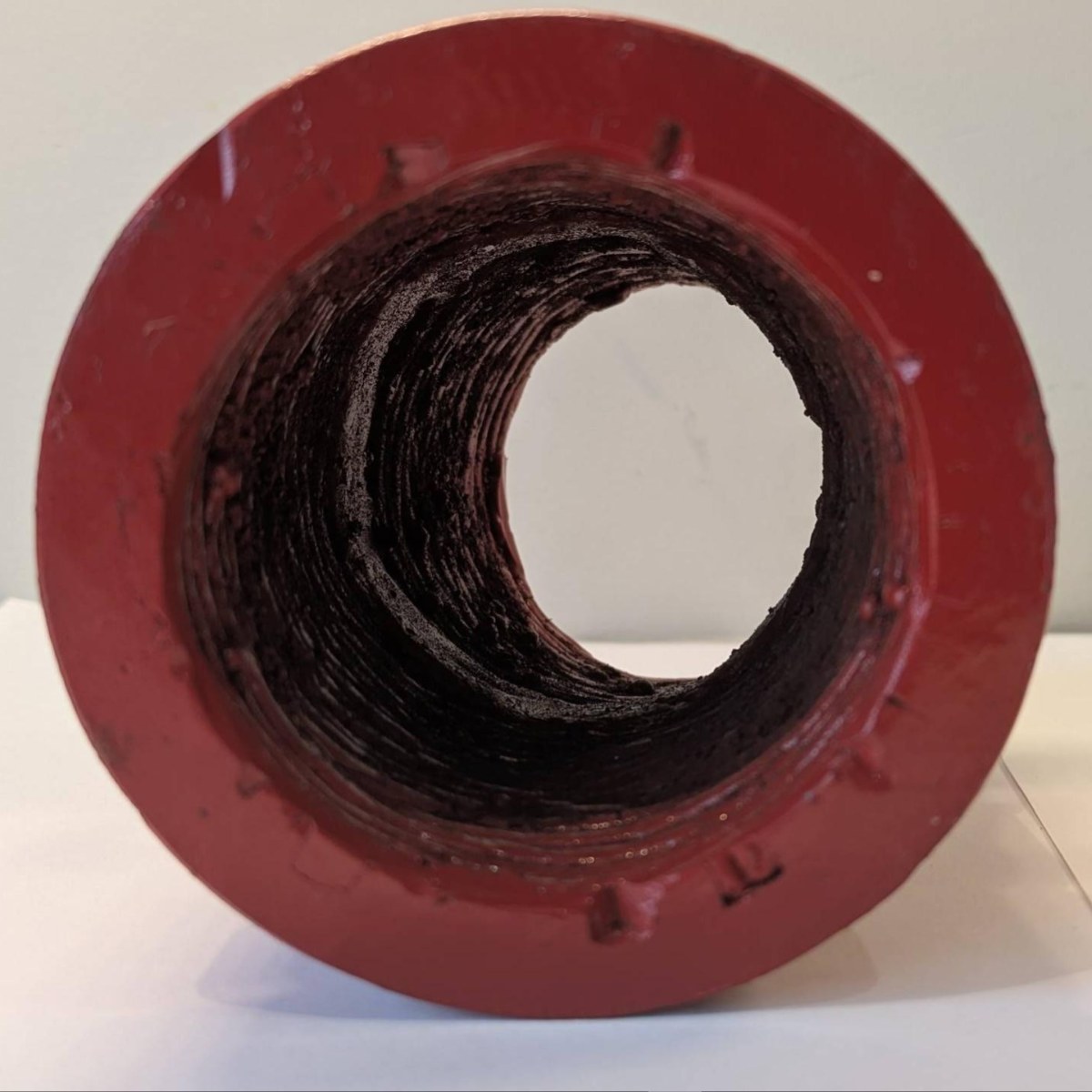
Most of the cost in a hardfaced elbow is the weld, not the steel. Putting more of it where the position hits, and no more than it needs where it doesn't, is how the service life goes up without the part turning into a premium product.
What it takes from you
One pulled elbow and the position it came off. No trial, no form, no line survey. Ours, the drawing is on file. Someone else's, send the drawing with it.
Next time one comes out, send it to us instead of the bin. A photo of the bore is enough to start.
How the program works, step by step: Return & Reinforce. The earlier note on reading a removed part: Reading the worn part. The components it applies to: Hrd67.